
Difference Between Chef and Cook: Roles, Skills & Salary Explained
ASSESS YOUR SKILLS NOW - FREE!!Many people use the terms chef and cook as if they mean the same thing. While both prepare food, there are important differences between these two roles. Understanding the difference between chef and cook can help you choose the right career path if you want to work in the hospitality industry.
In this guide, we will explain the difference between chef and cook, including their roles, responsibilities, skills, qualifications, salaries, and career opportunities. We will also discuss how Recognition of Prior Learning (RPL) can help experienced hospitality workers gain formal qualifications through Pentagon Consultancy.
What Is the Difference Between Chef and Cook?
The main difference between chef and cook is the level of training, responsibility, and experience.
A cook usually prepares meals by following recipes and instructions. They may work in cafés, restaurants, schools, hospitals, or catering businesses.
A chef, on the other hand, has advanced culinary knowledge and is responsible for managing kitchen operations, creating menus, supervising staff, and maintaining food quality.
When comparing cook vs chef, a chef generally has more experience, leadership responsibilities, and formal training than a cook.
Roles and Responsibilities
Responsibilities of a Cook
A cook is mainly responsible for preparing food according to established recipes and kitchen procedures. Their duties often include:
- Preparing ingredients
- Cooking meals
- Following food safety standards
- Cleaning kitchen equipment
- Assisting other kitchen staff
- Maintaining hygiene
A cook usually works under the direction of a chef or kitchen manager.
Responsibilities of a Chef
The difference between a cook and chef becomes more noticeable when looking at a chef's responsibilities.
A chef typically manages many aspects of the kitchen, including:
- Planning menus
- Supervising kitchen staff
- Ordering ingredients
- Controlling food costs
- Training junior employees
- Maintaining food quality
- Ensuring kitchen safety
The chef and cook difference is not just about cooking—it also involves leadership and management.
Skills Required
Another important difference between chef and cook is the skill level required.
Skills of a Cook
A cook should have:
- Basic cooking techniques
- Food preparation skills
- Time management
- Teamwork
- Attention to detail
- Knowledge of food hygiene
These skills help cooks prepare meals efficiently while maintaining quality.
Skills of a Chef
The difference between a cook and chef also includes advanced professional skills.
Chefs usually need:
- Menu planning
- Kitchen management
- Leadership
- Budget control
- Staff supervision
- Advanced cooking techniques
- Creativity
- Problem-solving
When comparing cook and chef difference, chefs are expected to combine culinary expertise with management abilities.
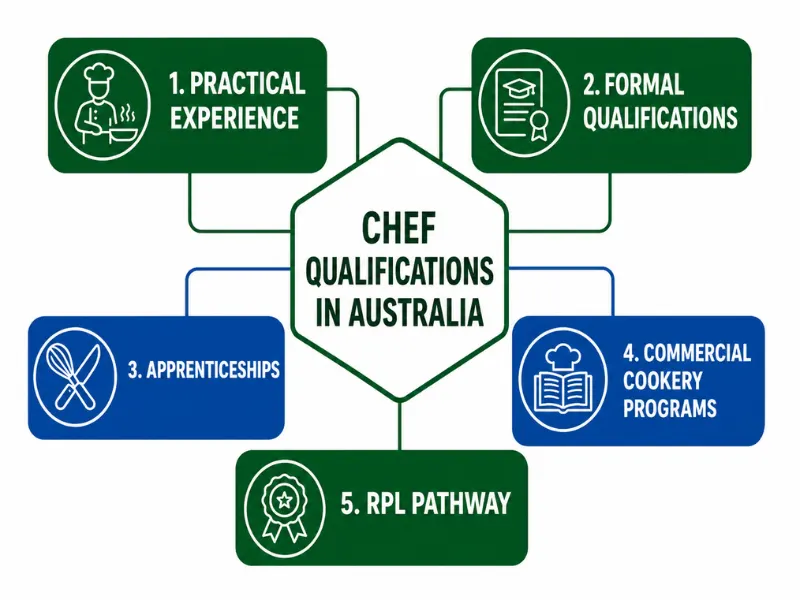
Qualifications
Qualifications are another major difference between chef and cook.
Many cooks begin working with practical experience and may not have formal qualifications when they first enter the industry.
However, chefs often complete recognised hospitality qualifications, apprenticeships, or commercial cookery programs to build advanced knowledge and skills.
For experienced hospitality workers who never completed formal training, RPL chef pathways can help gain nationally recognised qualifications based on existing work experience.
At Pentagon Consultancy, we assist experienced kitchen professionals through RPL chef services, making it easier to gain formal recognition without repeating skills they already have.
Career Growth
The difference between chef and cook also affects career progression.
A cook may continue working in food preparation roles or gain experience over time.
A chef has opportunities to become:
- Sous Chef
- Head Chef
- Executive Chef
- Kitchen Manager
- Restaurant Owner
- Catering Business Owner
Many cooks eventually become chefs after gaining experience, completing qualifications, and developing leadership skills.
This career pathway is one reason many people compare cook vs chef before deciding on their future.
Salary Comparison
One of the biggest questions people ask about the difference between chef and cook is salary.
Cook Salary
Cooks generally earn steady incomes depending on:
- Experience
- Employer
- Location
- Working hours
Chef Salary
Chefs usually earn higher salaries because they take on greater responsibilities.
Head chefs, executive chefs, and specialised chefs often receive significantly higher pay than entry-level cooks.
The chef and cook difference in salary reflects the higher skill level, qualifications, and management responsibilities expected from chefs.
Can a Cook Become a Chef?
Yes. Many successful chefs started their careers as cooks.
Learning practical skills, gaining workplace experience, and completing recognised qualifications help cooks move into chef positions.
If you already have years of experience in commercial kitchens, RPL chef services can help you gain formal qualifications more quickly.
Pentagon Consultancy supports hospitality workers by assessing existing skills and guiding them through the RPL process.
RPL for Experienced Hospitality Workers
Recognition of Prior Learning (RPL) is an excellent option for experienced cooks and chefs.
Instead of studying from the beginning, RPL allows your workplace experience to count toward nationally recognised qualifications.
Through RPL chef, experienced hospitality professionals may qualify using evidence such as:
- Employment records
- References
- Kitchen experience
- Menus created
- Work photographs
- Payslips
Pentagon Consultancy specialises in RPL chef services and helps applicants prepare the documents needed for successful assessments.
RPL can save time while improving career opportunities and increasing confidence when applying for senior hospitality roles.
Which Career Is Right for You?
When looking at the difference between chef and cook, there is no single right answer.
Choose a cook career if you:
- Enjoy preparing food
- Want to enter hospitality quickly
- Prefer practical kitchen work
Choose a chef career if you:
- Want leadership responsibilities
- Enjoy creating menus
- Like managing teams
- Want higher earning potential
- Plan to own a restaurant one day
Understanding the cook and chef difference helps you choose the path that matches your interests and career goals.
Why Choose Pentagon Consultancy?
Pentagon Consultancy helps experienced hospitality workers gain nationally recognised qualifications through RPL.
Our services include:
- RPL eligibility assessments
- Qualification guidance
- Evidence collection support
- Application assistance
- Career pathway advice
Whether you are a cook planning to become a chef or an experienced professional seeking formal recognition, our team can help simplify the process.
Conclusion
The difference between chef and cook goes beyond simply preparing food. Chefs take on leadership, menu planning, kitchen management, and staff supervision, while cooks mainly focus on food preparation and daily kitchen tasks.
Understanding the difference between chef and cook can help you make informed career decisions and plan your future in the hospitality industry.
If you already have kitchen experience, Pentagon Consultancy can help you gain recognised qualifications through RPL chef, making it easier to advance your career without starting from scratch.
FAQ
The main difference between chef and cook is that chefs have greater responsibility, advanced training, and leadership roles, while cooks mainly prepare food.
Yes. A chef generally supervises kitchen operations and manages staff, while cooks usually work under a chef's direction.
Yes. With experience, professional training, and recognised qualifications, a cook can progress to becoming a chef.
Many chefs complete recognised commercial cookery qualifications or gain certification through RPL if they already have industry experience.
Yes. Chefs usually earn more than cooks because of their additional responsibilities and leadership roles.
Chefs manage kitchen operations, plan menus, supervise staff, control food quality, and maintain food safety standards.
Important skills include food preparation, hygiene practices, teamwork, time management, and attention to detail.
Professional training is highly recommended as it builds technical skills and improves career opportunities. Experienced workers may also qualify through RPL.
A head chef manages the entire kitchen, including staff, menus, budgeting, and operations, while a cook focuses mainly on preparing meals.
It depends on your career goals. A chef role offers greater responsibility, leadership opportunities, and higher earning potential, while a cook role provides a solid starting point in the hospitality industry.