
How Much Can an Electrician Earn in Australia? Salary Guide 2026
ASSESS YOUR SKILLS NOW - FREE!!Electricians play an important role in Australia's construction, maintenance, and infrastructure industries. From installing electrical systems in residential properties to maintaining complex commercial equipment, qualified electricians are needed across different sectors. With ongoing demand for skilled tradespeople, electrical work can offer attractive earning opportunities and long-term career growth.
If you are considering this career, you may wonder how much can an electrician earn in Australia in 2026, and how much electricians make at different stages of their career. The answer depends on several factors, including qualifications, experience, location, specialisation, and working arrangements. Together, these factors shape overall electrician income in Australia. Understanding them can help you make informed decisions about your career. If you are still deciding on the trade, start with our guide on how to become an electrician in Australia.
Average Electrician Salary in Australia in 2026
The electrician salary in Australia varies depending on experience and the type of work performed. Qualified electricians generally earn more than apprentices because they have completed the required training and workplace assessments.
As a general guide, electricians may earn:
- Apprentice Electricians: 16–28 per hour (depending on apprenticeship year)
- Qualified Electricians: 35–55 per hour
- Experienced Electricians: 45–65 per hour
- Specialised Electricians: 50–75+ per hour
These are indicative market ranges rather than fixed rates. Actual earnings can vary depending on the employer, industry, employment agreement, and location.
When researching how much can an electrician earn, it is also important to consider additional payments such as overtime, allowances, and weekend rates, which can increase overall income.
Factors That Influence Electrician Earnings
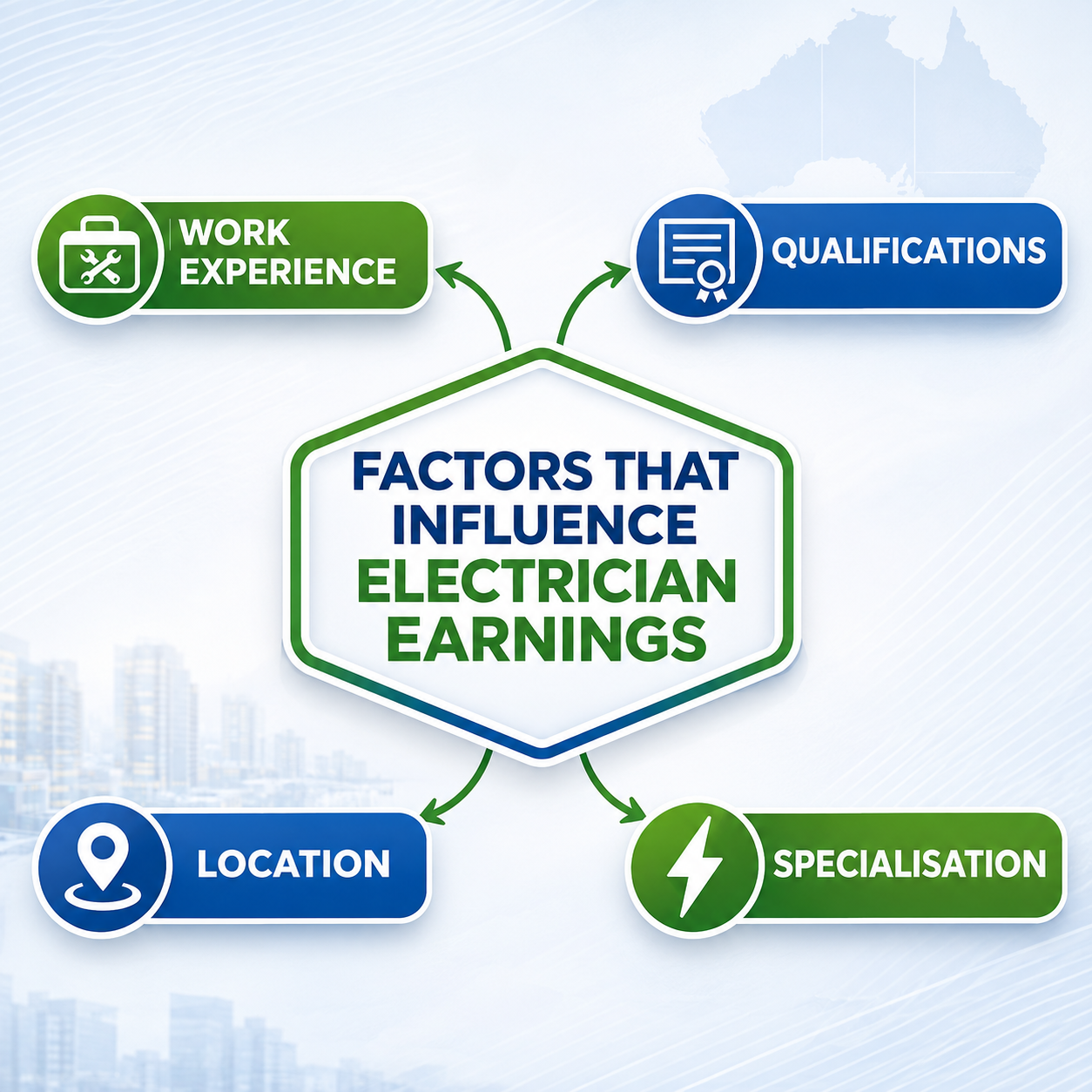
Not every electrician receives the same salary. Several factors determine earning potential across the Australian electrical industry.
1. Work Experience
Experience can make a significant difference to earning potential. New electricians usually start at lower pay rates, while experienced professionals may earn more because they can handle complex installations, troubleshoot problems, and work independently.
2. Qualifications
Having the appropriate Australian trade qualification is important for career progression. Completing a recognised Certificate III in Electrotechnology Electrician can help individuals develop the technical knowledge and practical skills required for the electrical trade.
3. Location
Electricians working in major cities, regional construction projects, and remote locations may receive different pay rates. Areas experiencing high demand for skilled workers may offer better earning opportunities.
4. Specialisation
Electricians working in industrial automation, renewable energy, commercial installations, and high-voltage systems may have opportunities to earn higher salaries because of their specialised skills.
How Experience Changes Your Earning Potential
Your earnings generally increase as you gain practical knowledge and develop advanced electrical skills.
- Apprentice: Apprentices earn while completing their training and developing practical trade skills.
- Newly Qualified: Newly qualified electricians can access a wider range of employment opportunities.
- Five Years of Experience: Experienced electricians may take on independent responsibilities and more complex projects.
- Senior Electrician: Senior professionals may supervise teams, manage projects, or move into specialised electrical roles.
If you are researching how much can an electrician earn with several years of experience, remember that industry specialisation and additional responsibilities can make a considerable difference.
Qualifications Needed to Become an Electrician
To work as a qualified electrician in Australia, you generally need to complete an approved apprenticeship and the relevant nationally recognised trade qualification, along with meeting state or territory licensing requirements.
The Certificate III in Electrotechnology Electrician is the main trade qualification associated with becoming an electrician.
People with existing electrical industry experience may also explore Recognition of Prior Learning (RPL) . Through RPL, previous workplace skills, knowledge, and training can be assessed against the qualification requirements.
Pentagon Consultancy can help individuals understand qualification pathways, including the Certificate III in Electrotechnology Electrician, and explore whether their previous experience may support an RPL application.
Some people also search for a Certificate III in Electrotechnology Electrician online. However, electrical training involves practical competencies and workplace assessment, so the qualification cannot necessarily be completed entirely online. The available delivery options depend on the registered training organisation.
Can Specialised Electricians Earn More?
Yes, certain electrical specialisations can offer higher earning opportunities because they require additional technical knowledge and experience.
Some areas worth exploring include:
- Industrial electrical work
- Mining and resources
- High-voltage systems
- Solar and renewable energy
- Electrical automation
- Commercial electrical installations

Self-employment can also provide opportunities to increase income. However, business owners must consider operating expenses, insurance, equipment, licensing, and periods without paid work.
Ultimately, how much can an electrician earn depends on the skills they develop and the career direction they choose. If you want to compare other trades, see our guide to the highest paying trades in Australia.
Build Your Electrical Career with Pentagon Consultancy
A recognised qualification can help you establish a strong foundation for a career in the Australian electrical industry. Whether you are starting your trade journey or have previous electrical experience, understanding the available qualification pathways is an important first step.
Pentagon Consultancy helps individuals explore suitable qualification and RPL options based on their experience and career goals. If you have worked in the electrical industry but do not hold a formal Australian qualification, you can check your RPL eligibility here and understand the assessment requirements.
With the right qualifications, practical experience, and industry knowledge, you can work towards better employment opportunities and long-term career development.
Frequently Asked Questions
A qualified electrician may earn approximately 75,000–110,000 annually. Specialised and experienced electricians can earn more, depending on their industry and location.
Qualified electricians generally make around 35–55 per hour, although rates vary by employer, experience, and location.
Apprentices may earn approximately 16–28 per hour, depending on their apprenticeship year, age, and applicable employment agreement.
An electrician with five years of experience may earn around 85,000–110,000 annually, depending on their skills, specialisation, and employer.
Yes. Electrician income can vary between states due to industry demand, regional projects, and living costs. Remote and mining positions may offer additional allowances.
Self-employed electricians may generate $100,000 or more in annual business revenue. However, actual personal income depends on expenses, workload, and business costs.
Mining, industrial, high-voltage, and specialised automation electricians may earn higher salaries because of their technical expertise and working conditions.
Yes. Eligible electricians may receive additional payments for overtime, weekends, public holidays, and certain shift arrangements, depending on their employment conditions.
You generally need to complete an approved electrical apprenticeship, obtain the relevant Certificate III trade qualification, and meet the licensing requirements of your state or territory.
Yes, experienced electrical workers may use RPL to demonstrate existing competencies. However, all qualification requirements must be met, and electrical licensing requirements still apply.