
How Much Does RPL Cost in Australia? Complete Guide
ASSESS YOUR SKILLS NOW - FREE!!Recognition of Prior Learning (RPL) helps you turn your existing skills and work experience into a nationally recognised qualification. It is a useful option if you have learned on the job, through earlier training, or through self-employment, but do not hold the qualification.
One of the first questions people ask is how much does RPL cost, and whether it is affordable. The answer depends on the qualification, the provider, the assessment requirements, and the evidence you can show. This guide explains each factor so you can compare options and plan your budget.
Understanding RPL in Australia
RPL is an assessment process that checks whether your skills and knowledge meet the requirements of a nationally recognised qualification. Instead of repeating training for skills you already have, you submit evidence for assessment.
For example, an experienced chef, electrician, plumber, or business professional may be able to apply for a qualification through RPL if their experience matches the required competencies. You can browse the RPL qualifications available through Pentagon Consultancy to see what suits your background.
However, work experience alone does not guarantee a qualification. You must show the required skills through evidence and any extra assessment activities the assessor asks for.
What Is the Average RPL Certificate Cost?
There is no single price for every RPL application. The RPL certificate cost can vary a lot depending on the qualification and the provider. Most people can expect a range of roughly $1,500 to $5,000, though some higher-level or trade qualifications can cost more.
Some qualifications need fewer assessment tasks. Others need detailed evidence, practical demonstrations, or technical assessments. When you research RPL cost, ask providers for a personalised quote instead of relying only on general estimates. Also check what the quoted fee includes and whether extra charges may apply.
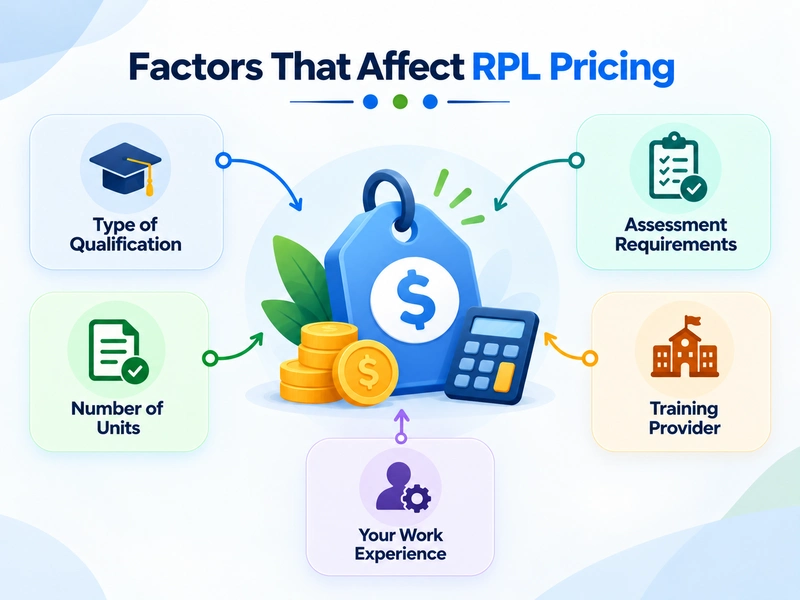
Factors That Affect RPL Pricing
Several factors can influence the total amount you pay for an RPL assessment.
1. Type of Qualification
The qualification you choose is one of the main factors affecting the price. A business qualification may have different assessment requirements from a trade qualification that requires practical demonstrations and technical evidence.
2. Number of Units
Some qualifications contain more units than others. Assessing a larger number of units may require more time to review your evidence and confirm your competency.
3. Your Work Experience
Your experience can influence the assessment process. If you have strong, relevant evidence covering the required competencies, the assessment may be more straightforward. If evidence is missing, additional assessment activities may be necessary.
4. Assessment Requirements
Certain qualifications may require interviews, workplace observations, practical demonstrations, or other assessment tasks. These requirements can affect the overall fee.
5. Training Provider
Different registered training organisations (RTOs) may charge different fees depending on their assessment processes and service arrangements.
RPL Australia Cost for Different Qualifications
The RPL Australia cost can vary between industries and qualification levels. Certificate III, Certificate IV, diploma, and trade qualifications may have different assessment requirements.
For example, a Certificate III qualification may require evidence of practical workplace skills, while a Certificate IV qualification may assess more advanced technical, supervisory, or planning abilities.
Trade qualifications can involve additional practical or technical assessment requirements. The actual price depends on the specific qualification, units, provider, and your circumstances.
Before applying, confirm that the provider is authorised to assess the qualification you want.
Certificate III and Certificate IV RPL Fees
The RPL certificate cost for Certificate III and Certificate IV qualifications is not always the same.
Certificate III qualifications often focus on practical skills and workplace competency. Certificate IV qualifications may involve more complex responsibilities, depending on the field and units involved.
However, a Certificate IV assessment is not automatically more expensive than a Certificate III assessment. The number of units, evidence requirements, and assessment arrangements are important factors.
Ask the provider to explain how the fee has been calculated for your chosen qualification.
Are There Additional RPL Fees?
When comparing prices, look beyond the initial quote. Some providers may charge separate fees for particular services or assessment requirements.
Depending on the provider and qualification, possible additional costs may include:
- Practical assessment arrangements
- Workplace visits, where required
- Additional assessment activities
- Training to address identified skill gaps
- Reassessment fees, if applicable
- Replacement documents, where applicable
Not every applicant will need these services. Ask for a written breakdown so you can understand the total potential cost before proceeding.
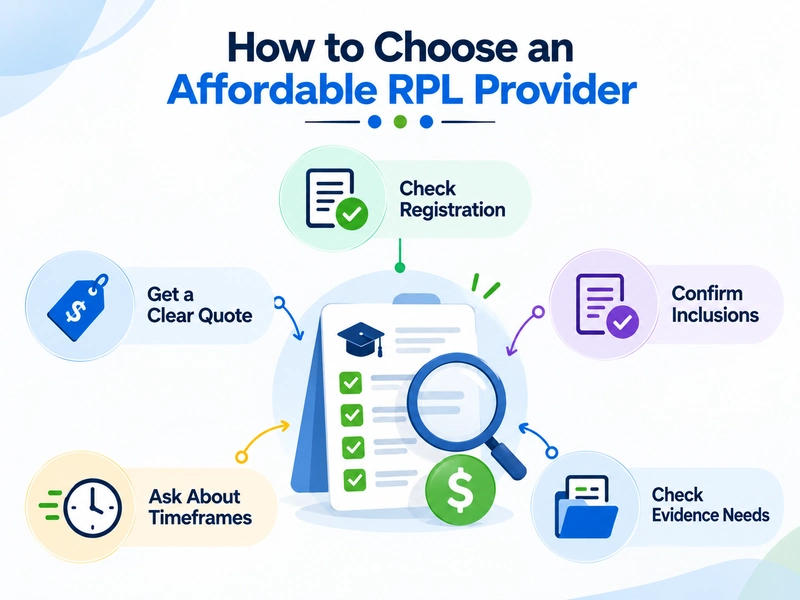
How to Choose an Affordable RPL Provider
Finding a low price should not be your only consideration. You should also check the provider's credentials, assessment process, communication, and experience with your chosen qualification.
Before making a decision:
- Check the provider's registration and qualification scope.
- Ask for a clear written quote.
- Confirm what the fee includes.
- Check whether extra assessment costs may apply.
- Ask about expected timeframes (some providers offer fast RPL options)
- Understand the evidence requirements.
- Confirm the qualification being assessed.
A reliable provider should explain the process clearly and avoid promising a qualification without a proper assessment.
Get RPL Guidance from Pentagon Consultancy
If you are exploring RPL, Pentagon Consultancy can help you understand the right qualification pathway and the steps to apply. The team works with RTO partners and guides you on eligibility, documents, evidence preparation, and the assessment process.
Whether you are in plumbing, cookery, hairdressing, or construction, getting clear information before you apply makes budgeting easier. You can also explore local options such as RPL Perth, RPL Adelaide, or RPL Brisbane, or check RPL for plumbing.
Ready to find out your options? Contact Pentagon Consultancy to discuss your experience and get a clear idea of the cost.
Frequently Asked Questions
The price varies depending on the qualification, provider, number of units, and assessment requirements. Request a written quote from an appropriately registered provider for an accurate estimate.
The qualification, number of units, evidence provided, practical assessment needs, provider fees, and any additional training can affect the total price.
It can be. The fee depends on the qualification's assessment requirements and the provider. The qualification level alone does not determine the price.
Different qualifications assess different skills and knowledge. Some require detailed technical evidence, practical demonstrations, or workplace assessments, which can affect the assessment fee.
Possible additional fees may apply for practical assessments, reassessment, or training to address skill gaps. Ask your provider which services are included in the initial quote.
It can be cheaper if your existing skills meet the qualification requirements. However, additional training or assessment may increase the total cost.
Yes. You can contact providers to discuss your experience, the qualification you want, and the likely assessment requirements before deciding whether to proceed.
Your experience can affect the assessment process because relevant evidence may help demonstrate competency. However, the fee depends on the provider's pricing and the qualification requirements.
Common documents include a resume, employment references, work records, previous certificates, project documents, work samples, and other evidence relevant to your qualification.
Check the provider's registration, confirm that it can assess your chosen qualification, compare written quotes, and ask about extra fees, evidence requirements, and assessment timeframes.