
How to Become a Carpenter in Australia
ASSESS YOUR SKILLS NOW - FREE!!Carpentry is one of the most popular and rewarding trades in Australia. Carpenters play a key role in building homes, offices, renovations, and other construction projects. If you enjoy working with your hands, solving practical problems, and creating structures that last for years, carpentry could be a great career choice.
If you are wondering how to become a carpenter in Australia, this guide will explain the steps, qualifications, skills, and career opportunities available. We will also cover how Pentagon Consultancy can help experienced workers gain formal qualifications through RPL pathways.
Why Choose Carpentry as a Career?
Before learning how to become a carpenter in Australia, it is important to understand why many people choose this trade.
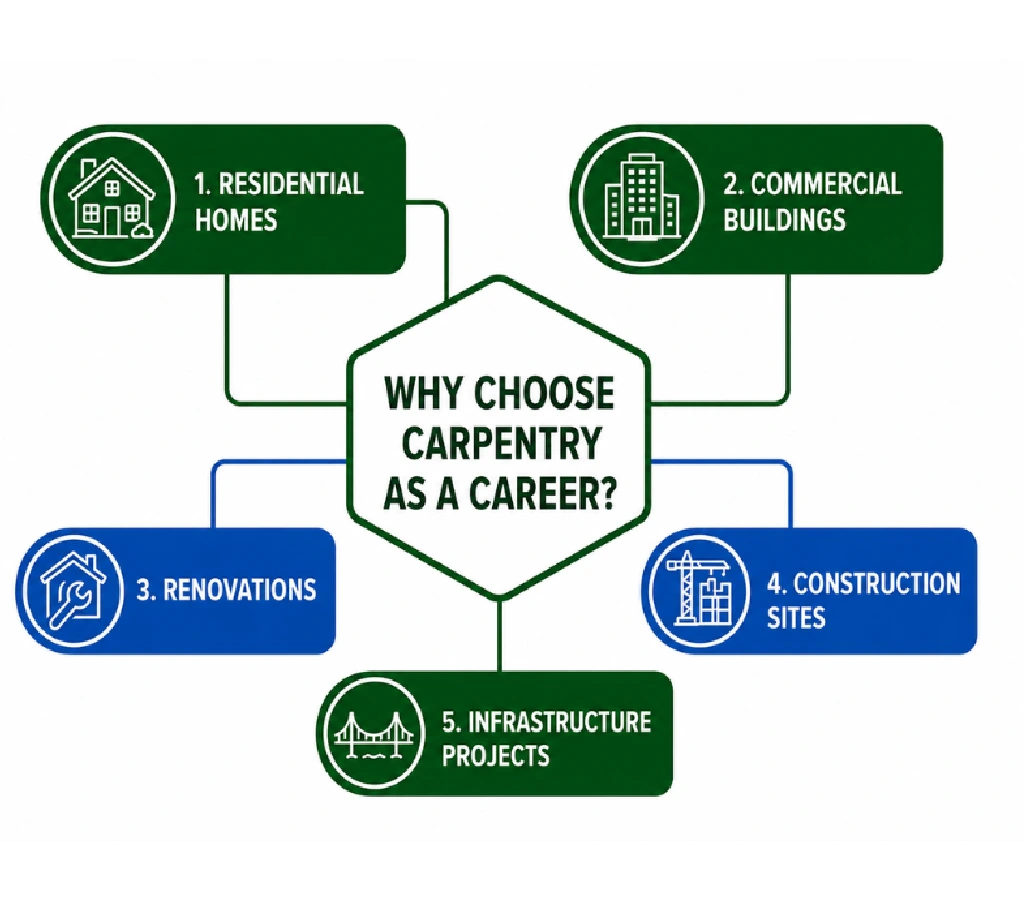
A carpenter in Australia can work on a variety of projects, including:
- Residential homes
- Commercial buildings
- Renovations
- Construction sites
- Infrastructure projects
The demand for skilled tradespeople remains strong across Australia. As construction activity continues to grow, qualified carpenters are needed in both cities and regional areas.
For many people researching how to become a carpenter, the career offers good earning potential, job security, and opportunities to start a business in the future.
Step-by-Step Guide to Become a Carpenter in Australia
Step 1: Finish School or Meet Basic Entry Requirements
The first step in how to become a carpenter in Australia is meeting basic education requirements. While completing high school can be helpful, it is not always mandatory.
Subjects such as maths, design, woodwork, and construction can provide useful knowledge before entering the trade.
Even if you left school early, there are still pathways available for individuals interested in how to become a carpenter through apprenticeships and vocational training.
Step 2: Complete a Carpentry Apprenticeship
A carpentry apprenticeship is the most common pathway for anyone learning how to become a carpenter in Australia.
During an apprenticeship, you work with experienced tradespeople while completing formal training. This allows you to earn income while learning practical skills.
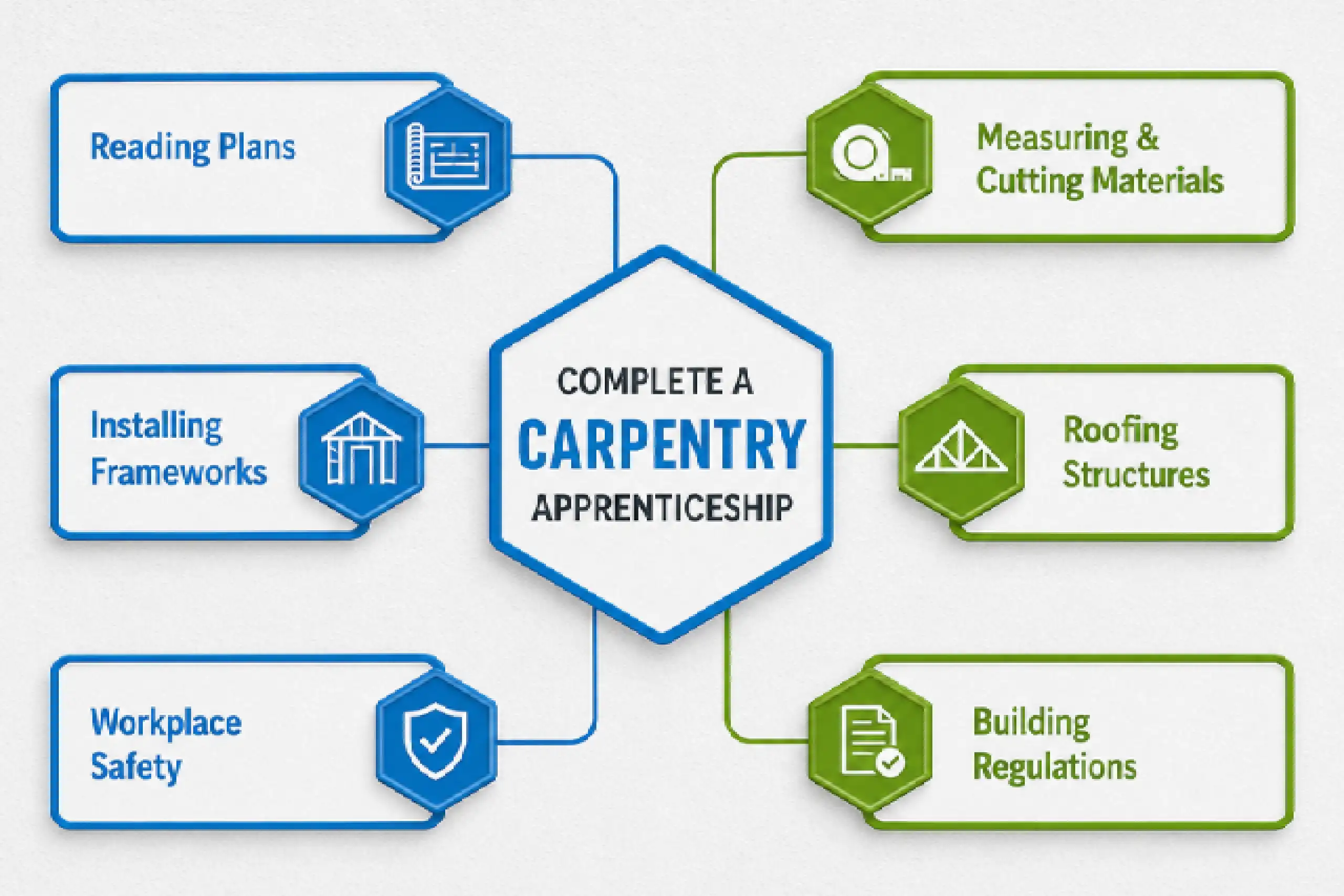
An apprenticeship usually takes around four years and covers:
- Reading plans
- Measuring and cutting materials
- Installing frameworks
- Roofing structures
- Workplace safety
- Building regulations
For anyone asking how to become a carpenter, completing an apprenticeship provides valuable hands-on experience that employers look for.
Step 3: Complete Certificate III in Carpentry
A key requirement for how to become a carpenter in Australia is completing Certificate III in Carpentry.
This qualification is the industry standard for carpenters and covers the skills needed to work safely and effectively on construction projects.
The Certificate III in Carpentry includes training in:
- Building structures
- Construction materials
- Flooring systems
- Wall framing
- Roof construction
- Site safety
Most apprentices complete Certificate III in Carpentry as part of their apprenticeship training.
If you are searching for the best carpentry course in Australia, this qualification is generally considered the main starting point for a professional carpentry career.
Step 4: Gain Practical Work Experience
Work experience is an important part of how to become a carpenter in Australia.
The more projects you work on, the more confidence and skills you develop. Practical experience helps you learn how construction sites operate and how to handle different carpentry tasks.
A skilled carpenter in Australia may work on:
- House framing
- Decking
- Renovations
- Commercial construction
- Formwork
- Fit-outs
Experience can also help increase future earnings and career opportunities.
Step 5: Consider Licensing Requirements
In some Australian states and territories, carpenters may need licences for certain types of work, especially when operating their own business or taking on larger building projects.
If you are researching how to become a carpenter, it is important to check the rules that apply in your state.
Licensing requirements can vary depending on:
- Location
- Project value
- Type of construction work
- Business ownership plans
Understanding these requirements early can help you plan your career more effectively.
Step 6: Explore RPL Pathways
Not everyone follows the traditional apprenticeship route. Many people have years of construction experience but never completed formal qualifications.
This is where RPL carpentry can help.
Recognition of Prior Learning (RPL) allows experienced workers to have their existing skills assessed against qualification requirements.
Through RPL carpentry, eligible workers may gain nationally recognised qualifications without repeating training they already know.
At Pentagon Consultancy, we help construction workers prepare evidence for RPL carpentry applications, including:
- Employment records
- Work references
- Site photos
- Project details
- Trade experience documentation
This can be a faster and more convenient pathway for experienced workers.
Choosing the Right Carpentry Course
When looking for a carpentry course in Australia, it is important to choose a recognised training provider.
A quality carpentry course in Australia should provide:
- Nationally recognised qualifications
- Practical training
- Industry-relevant skills
- Support from experienced trainers
For most learners,Certificate III in Carpentry remains the best starting qualification.
Whether you are beginning your career or using RPL carpentry pathways, selecting the right carpentry course in Australia can make a significant difference.
Career Opportunities for Carpenters
Once qualified, a carpenter in Australia can choose from many career paths.
These include:
- Residential carpenter
- Commercial carpenter
- Formwork carpenter
- Renovation specialist
- Construction supervisor
- Self-employed contractor
The construction industry offers ongoing opportunities for skilled workers. This is one reason many people search how to become a carpenter in Australia each year.
A qualified carpenter in Australia can also continue developing skills and move into leadership or business ownership roles.

Average Carpenter Salary in Australia
Salary levels vary depending on experience, location, and specialisation.
A qualified carpenter in Australia can often earn a competitive income, especially with several years of experience.
Factors affecting earnings include:
- Skill level
- Project type
- Location
- Overtime work
- Business ownership
As construction demand continues across Australia, many carpenters enjoy stable employment and strong earning potential.
How Pentagon Consultancy Can Help?
At Pentagon Consultancy, we help tradespeople gain recognised qualifications through RPL and training support services.
Our team assists with:
- RPL assessments
- Evidence collection
- Qualification guidance
- Training pathway advice
- Career support
If you already work in construction and want formal recognition for your skills, our RPL carpentry services can help simplify the process.
Whether you are starting your journey or already have industry experience, Pentagon Consultancy can guide you toward the right qualification pathway.
Conclusion
Learning how to become a carpenter in Australia involves gaining practical experience, completing recognised training, and developing strong trade skills.
For most people, the journey includes an apprenticeship and Certificate III in Carpentry. However, experienced workers may also benefit from RPL carpentry pathways that recognise existing skills.
With strong industry demand, good earning potential, and many career opportunities, carpentry remains one of Australia's most popular trades. If you are ready to start your career, Pentagon Consultancy can help you find the best pathway toward becoming a qualified carpenter.
FAQ
To become a carpenter, you typically complete an apprenticeship and gain a recognised qualification such as Certificate III in Carpentry.
Most employers and industry bodies require Certificate III in Carpentry as the main qualification.
A carpentry apprenticeship usually takes around four years to complete.
The most widely recognised carpentry course in Australia is Certificate III in Carpentry.
Yes. Carpentry offers strong demand, stable employment, and opportunities for career growth.
Important skills include measuring, problem-solving, communication, teamwork, attention to detail, and practical construction abilities.
Licensing requirements vary by state and the type of work being performed.
Salaries vary by location and experience, but qualified carpenters can earn competitive incomes across Australia.
Course costs vary depending on the provider, training method, and available government funding.
Yes. Many people start through apprenticeships that provide training and practical experience while they learn.