
Plumbing vs Electrician: Which Trade Is Better for Your Career?
ASSESS YOUR SKILLS NOW - FREE!!Choosing a skilled trade can lead to a practical and rewarding career in Australia. Plumbing and electrical work are two popular options for people who enjoy hands-on work, problem-solving, and learning practical skills. However, the daily work, training pathway, and licensing requirements are different.
When comparing plumbing vs electrician, it is important to look at your interests, strengths, career goals, and preferred type of work. There is no single trade that suits everyone. Understanding the differences can help you make a more informed career decision.
What Does a Plumber Do?
Plumbers work with water supply, drainage, sanitation, pipes, fixtures, and other plumbing systems. Their work can include installing, maintaining, repairing, and replacing plumbing systems in homes, commercial buildings, and other properties.
A plumber may install pipes for new buildings, repair leaks, maintain water systems, install bathroom fixtures, or work on drainage problems. The job can involve working indoors and outdoors and may require physical activity.
People who enjoy practical work, construction, troubleshooting, and working with tools may find plumbing interesting. For experienced plumbers looking to have their existing skills and experience formally recognised, RPL Plumbing can be a suitable pathway.
What Does an Electrician Do?
Electricians work with electrical systems, wiring, equipment, power supplies, and electrical installations. Their work can include installing, testing, maintaining, and repairing electrical systems.
Electricians may work on residential buildings, commercial properties, industrial sites, construction projects, and maintenance jobs. Safety is a major part of electrical work because incorrect installation or repairs can create serious risks.
People who enjoy technology, problem-solving, technical systems, and careful practical work may be interested in this trade.
Plumbing vs Electrician: Key Differences
The main difference between the two trades is the type of systems they work with. Plumbers generally work with water, gas where authorised, drainage, and related systems, while electricians work with electrical systems and equipment.
In electrician vs plumbing comparisons, it is useful to consider the work environment, physical requirements, training, licensing, and long-term career options.
| Area | Plumbing | Electrical |
|---|---|---|
| Main work | Pipes, water and drainage systems | Wiring, electrical systems and equipment |
| Work setting | Homes, buildings and construction sites | Homes, buildings, construction and industrial sites |
| Key skills | Installation, repair and problem-solving | Wiring, testing and technical problem-solving |
| Physical work | Often physically demanding | Can involve physical and technical work |
| Safety | Important around water, gas and equipment | Critical around electrical systems |
| Licensing | State or territory requirements apply | State or territory requirements apply |
Training and Qualifications
Training is an important part of both careers. A person entering plumbing generally needs to complete an appropriate plumbing apprenticeship and nationally recognised qualification, with licensing requirements depending on the state or territory.
For electrical work, the common qualification pathway includes Certificate III in Electrotechnology Electrician, generally completed through an apprenticeship. Electrical licensing requirements also vary between Australian states and territories.
When considering electrician vs plumber, it is important to research the exact training and licensing rules that apply in the location where you plan to work.
Which Trade Is More Physically Demanding?
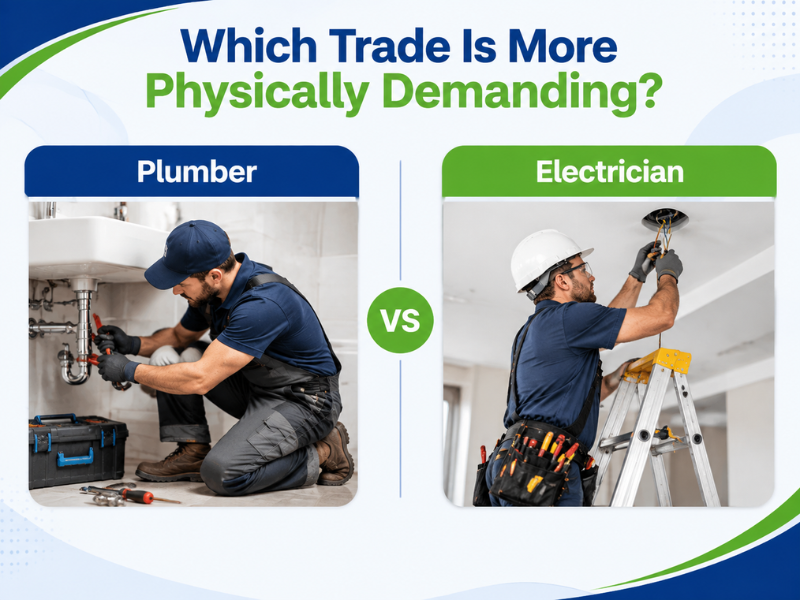
Both trades can involve physical work. Plumbers may spend time bending, lifting, kneeling, working in small spaces, and carrying tools or materials. Electricians can also work in difficult positions, climb ladders, carry equipment, and spend time on construction sites.
The physical demands can vary depending on the job, workplace, and area of specialisation.
If you are deciding between plumber or electrician, think about the type of physical work you are comfortable performing regularly rather than assuming one trade is always easier.
Which Trade Has Better Career Opportunities?
Both plumbing and electrical work are established skilled trades with employment opportunities across residential, commercial, construction, maintenance, and other areas.
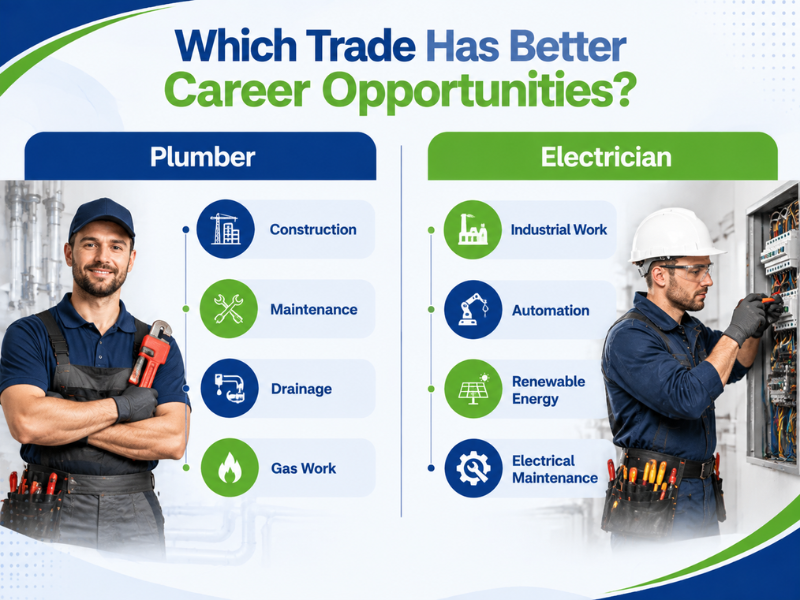
Career opportunities can also change as industries, building activity, technology, and regulations develop. Electricians may move into areas such as industrial electrical work, automation, renewable energy, or electrical maintenance. Plumbers may develop careers in construction, maintenance, drainage, gas-related work where authorised, or specialist plumbing areas.
Therefore, plumbing vs electrician should be considered based on the type of work and career direction you want to pursue.
Income and Career Growth
Income can vary considerably in both trades. Experience, location, specialisation, employment type, overtime, industry, and business ownership can all affect earnings.
Rather than choosing a trade based only on potential income, consider the complete career pathway. Building strong technical skills, gaining experience, meeting licensing requirements, and developing business skills can support career growth in either field.
Some experienced tradespeople also establish their own businesses after meeting the relevant requirements.
Plumbing vs Electrician: Which Skills Do You Need?
Plumbers need practical problem-solving skills, attention to detail, physical coordination, tool knowledge, and the ability to understand plans and systems.
Electricians need careful attention to detail, technical understanding, problem-solving ability, safety awareness, and the ability to interpret electrical diagrams and instructions.
Both careers require communication skills because tradespeople often work with customers, builders, contractors, supervisors, and other workers.
Can You Become Both?
It is possible to develop skills and qualifications in both areas, but each trade has its own training and licensing requirements.
Someone who wants to work across both areas would need to complete the relevant training and meet the licensing rules for each trade. The additional qualification can broaden knowledge, but it also requires more time, study, assessment, and practical experience.
How Pentagon Consultancy Can Help
Choosing a trade is an important career decision, particularly if you are unsure which qualification matches your goals. Pentagon Consultancy can help you explore suitable training and qualification pathways in Australia.
If you are considering plumbing vs electrician, Pentagon Consultancy can provide guidance on relevant courses, RPL options, eligibility, and qualification pathways. Their support can help you understand your options before starting your training journey.
For people who already have industry experience, Recognition of Prior Learning (RPL) may also be worth exploring. RPL assesses existing skills and knowledge against qualification requirements and may reduce the need to repeat training in areas where competency can already be demonstrated.
Making Your Career Choice
The plumbing vs electrician decision should be based on your interests, skills, preferred work environment, and long-term career plans.
If you enjoy working with pipes, water systems, construction, and practical repairs, plumbing may suit your interests. If you prefer electrical systems, technical equipment, wiring, and detailed problem-solving, electrical work may be worth considering.
There is no universal answer to whether one trade is better. The right choice depends on what you want from your career and the type of work you enjoy.
FAQs
A plumber works mainly with water supply, drainage, pipes, fixtures, and related systems. An electrician works with electrical wiring, power systems, equipment, and electrical installations. Both trades require specific training and may require licensing.
Both can provide skilled career pathways. Your choice should depend on your interests, strengths, preferred work environment, and career goals. Consider the daily duties and training requirements before choosing a trade.
Both trades have different challenges. Plumbing can involve significant physical work and difficult work spaces, while electrical work requires careful attention to safety, technical systems, and detailed testing. The level of difficulty also depends on the type of work.
Earnings vary for both trades based on experience, location, specialisation, employment type, overtime, and other factors. It is not accurate to say that one trade always pays more than the other.
In Australia, people generally complete an appropriate plumbing apprenticeship and nationally recognised plumbing qualification. Licensing requirements vary between states and territories, so you should check the rules that apply where you intend to work.
A common pathway is an apprenticeship leading to Certificate III in Electrotechnology Electrician. Electrical licensing requirements apply and can differ between Australian states and territories.
Both trades have opportunities across different industries and work settings. Job availability can vary by location, industry conditions, specialisation, and experience. Researching local employment conditions can help you understand the opportunities in your area.
Both can involve physical work. Plumbing may include lifting, bending, kneeling, and working in confined spaces. Electrical work can involve climbing, carrying equipment, and working in different positions. Physical demands vary by role and workplace.
Yes, a person can pursue both trades, but each has separate training and licensing requirements. You would need to complete the appropriate qualification and meet the relevant regulatory requirements for each occupation.
Consider your interests, practical abilities, preferred work environment, and long-term goals. Speaking with a qualified training adviser can also help you understand the education, RPL, apprenticeship, and licensing pathways for each trade.